
Powering Your EV Journey
Switching to an electric vehicle is a smart move for your budget and the environment. Whether you’re buying new or preowned, we’ll guide you through every step — from getting started to maximizing your savings — so you can shop with confidence and make the most of your EV journey.
Electric Vehicle Benefits
EVs cost less to operate by substantially lowering maintenance and fuel costs. Charging your EV may cost less than half as much as fueling a standard gas car. Plus, you can save even more with state tax credits and rebates. Learn how SCE customers have saved time and money by making the switch to EVs.
Why your next vehicle should be an EV.
Considerations for EV Adoption
Most electric vehicles have a driving range of 50 to 330 miles. If, like most Californians, your daily commute is less than 100 miles, there is probably an affordable EV model to fit your needs. Visit Plugstar opens in new window to learn more about the variety of options available.
Commuting in an EV is a great way to save money on gas and maintenance; however, road trips can require additional planning. While locating charging stations is becoming easier each day, uncertainty around charging station locations can be stressful. While many EV models offer a range-per-charge of 150 to 250 miles or more, it’s important to plan accordingly to make sure you can find fast chargers in remote places or small towns along your route.
If you have more than one car now, consider an EV for your next vehicle. It’s a great opportunity to save and help the environment, and because they are so great to drive, most households end up using the EV as their primary vehicle.
Because EVs require charging, you’ll need direct access to either a standard 120V outlet or a 240V charger in your garage or driveway. Level 2 Electric Vehicle Supply Equipment (EVSE) can substantially reduce charging time and is more energy efficient.
Zero-Emission Vehicles (ZEVs) make it easy to save costs and pollute less. EVs use electricity typically generated from cleaner sources than fossil fuels.
Two EV Technologies to Choose From

A Plug-In Hybrid Electric Vehicle (PHEV) is a cross between a conventional hybrid electric vehicle and a purely electric vehicle. It has an electric motor connected to a battery and an internal combustion engine. The battery can be recharged by plugging into a regular outlet or a charging station. PHEVs use the energy in their battery to drive and can travel many more miles on gas, with a much higher fuel efficiency than most conventional vehicles.


常見問題
FAQ
Whether you’re commuting to work or running errands around town, there’s an EV to suit your driving style. Watch this one minute video that goes over the benefits of making the switch from a gas-powered vehicle to an EV. Find your EV Plugstar here.
You may qualify for an electric vehicle rebate when you purchase or lease a new or pre-owned EV. New state incentives offer instant savings for new and pre-owned EVs. SCE's Pre-Owned EV Rebate provides $1,000 or $4,000 depending on income eligibility, and the rebate becomes available within 180 days of purchase or lease. Use the links below to check your eligibility and explore available EV rebates and incentives.
Find local EV rebates that may be available to you by visiting ElectricForAll.org.
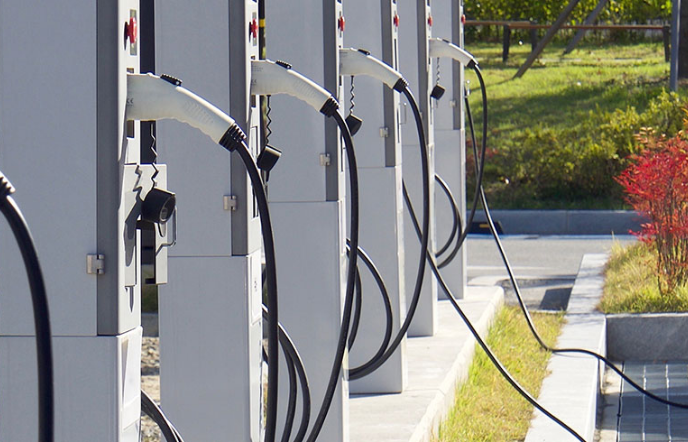
You can power up your EV at home or on the go. Find the charging station nearest you here.
尋找公共充電站
Level 1 plugs into a standard outlet. Level 2 needs a 240-volt connection and professional installation.


